
Healthier Together Series: Cycle 5D. Putting It All Together – Words Matter: 7 Steps to Self-Compassion.

tim-mossholder-SR8ByN6xY3k-unsplashWords are powerful. I can see this when I am talking with patients, my children, my spouse and my friends and colleagues. In this post, I am thinking about how powerful words can be to someone who is scared, feeling out of control, or uncertain of what is going on. This situation is common in a doctor’s office and in the hospital where people seek help when something unpleasant is happening that seems to be out of the control of the individual seeking care.

Studies have shown that patient outcomes are often impacted by what they hear from healthcare providers even when they hear something indirectly- if they believe it is about them. Consider this: What happens to a patient in the ER, frightened and waiting for a test result, hearing someone outside of the room saying, “Yeah…he’s a train wreck. It’s not looking good. There’s not much we will be able to do. He will have to follow up with his primary care doctor…”? Later (feels like HOURS to the patient), the provider comes into the patient’s room and says, “Thank you for waiting. Your labs were unremarkable and your chest x-ray came back and you do not have pneumonia. It’s probably just a viral upper respiratory infection. We recommend you follow up with your primary care provider…” Might this person be reassured by this visit?

People can be scared, feeling out of control, or uncertain of what is going on outside of the doctor’s office or hospital.  There are times when our senses hyper-sensitized, when we are on high alert, and what we hear, enters deep into our subconscious mind and begins to influence our feelings, thinking and behaviors. This hyper-alert state is usually when we are feeling strong emotions, when our mind is “wide open.” Words at these times are very powerful. They may be accurate and rational, but they may not be. Sometimes, we are aware of these influences and many times we are not.

In my practice, I see that there is much suffering related to the hostile and negative words we have absorbed at various vulnerable times in our lives. Maybe a parent, family member, teacher, partner, close friend, colleague said something hostile or we misinterpreted some comments which were deeply painful and our brain absorbed it and was altered by it. When I hear hostile and negative words being used against oneself, “I was bad,” “I failed,” “I have no discipline,” “I just can’t do it,” “I’m not strong enough,” “I’m hopeless,” “I’m no good,” “I’m stupid,” “I can’t help it,” “I’m just out of control,” I recognize one of the keys to healing and success will be to develop a capacity for self-compassion.

We have mentioned self-compassion before. When we develop the capacity for self-compassion, healing begins. When we practice self-compassion, success follows. If you use hostile and negative words to describe yourself or your character, stop now. It seeps in unexpectedly and it has no purpose. It blocks your ability to progress and limits your success. Good news! This negative self talk can be phased out and left behind. Replace it with a healthy practice of self-compassion. Here’s how:

  1. Become aware of it if you hear yourself saying something judgmental and negative about yourself. “I was bad (this implies a character flaw), I ate that cake even though I knew I shouldn’t. (a routine character flaw)
  2. Identify it and label it. “That was my negative self talk and it’s not true.”
  3. Reframe it.I feel bad (this implies a temporary feeling). I ate that cake even though I knew it would interfere with my weight loss goals. (a simple mistake)
  4. Reflect. “I have been very stressed and bought the cake to “treat” myself. I don’t actually feel better after eating the cake. My stress is not improved after eating the cake.”
  5. Learn. “Taking a walk outside, listening to music, dancing, calling a friend, drawing, or journaling DOES relieve my stress and also would be distracting me from the desire to eat cake.”
  6. Empower yourself. “Next time, I can try some or all of my other stress relieving activities. If I still want the cake, then I can still choose to eat a smaller piece of cake, but maybe I won’t have it. If I do, I will own it and move on. I will know that I am doing the best that I can, at that moment.”
  7. Reaffirm. “I am doing the best that I can, right now.” If you then hear yourself responding, “Well…actually, I COULD do better…” then smile to yourself and say, “I know you can… And, you will when you are ready.”

Given the power of words, imagine what might happen if you protected yourself from negative self talk. Imagine what your day would be like if you heard warm, loving, supportive comments all day and accepted you are human and humans make mistakes and allowed yourself to regularly reflect and learn how to get better and better. Can you appreciate how much you’d flourish and achieve? When you practice self-compassion, you open yourself to your incredible capacity for success and joyful living.

Let me know how you have conquered negative self-talk or how you practice self-compassion.

Photo by Tim Mossholder on Unsplash

 

Healthier Together Series: Cycle 5C. Relaxation & Sleep — 7 Steps to Using Traffic and Commuting for Self-Care

aditya-chinchure-ghbepAO7BCs-unsplashAfter residency, I decided I wanted to live within 10 minutes from my practice so I would not have to spend my precious time commuting to and from work. I moved within a 7 minute drive from my work, no traffic. I loved the extra time I had on either end of my work day. First, I was exercising more, cooking more dinners, and having time for grocery shopping. It was great! As time went on, I was able to fit other activities into that extra time and I could spend more time doing work-related activities. I could run a few more errands each day and I began taking on more work duties that could be accomplished in the extra time I now had.
As a result of my increased number of activities, the exercise routine became more sporadic. Instead of working out before work, I could “get more stuff done” and then plan to workout in the evenings. Of course, EVEN IF my clinic didn’t run late with last minute add-on patients and phone calls or EVEN IF I wasn’t too fatigued or hungry after a full clinic day missing lunch, my family members needed my focused attention and my workouts would be further “postponed.” I now didn’t have time to workout. Basically, the “saved” time started out as more time for self-care, but ultimately was squeezed out with with more time spent on activities and obligations that I didn’t need to do BEFORE I eliminated my commute and less self-care. Poor planning…Lots of reflection and learning…

Fast forward to my current job that I love but that is far from home. (We can discuss in the future about how to grow into the job you love.) When considering this job, I had to accept that I would have a total daily commute of potentially up to 2.5-3 hours with the common severe traffic. I considered taking the train in. The hospital even offers a free shuttle to drive people to and from the train station. However, I do not live close to the train station, so it would still take me about 2-2.5 hours door to door to take the train, and without the flexibility of coming and going as I wanted. It was clear. With this new job, I would have a long commute to and from work, 5 days a week.

I began investigating how to optimize my commute time. After trial and error and rapid “quality improvement,” my commute is part of my self-care time. If you have a long commute, here are my 7 steps to achieving a Self Care Commute:

  1. Figure out when you HAVE to be in your office.
    • Can you work from home on some days?
    • Does it matter the exact time you get to work or leave work?
    • Can you adjust your work day start and end times? If no, move to #4.
  2. Figure out your transportation options that agree with your work hours.
    • Do you need personal space and time without other people during your commute? Do you have a car? If yes, move to #3.
    • Are there ride share or public transportation options for you to get to and from your work that you would consider? For example: Uber, Lyft, Train, Subway, Bus, Carpool with neighbor. List them.
    • How long does it take to get from your front door, to your office door for each of those options? Add to your list next to each option.
    • Is your schedule predictable enough that your schedule can match a ride share, bus or train schedule? If no, move to #3.
    • Will you need to travel from one site to another during the day? If so, will it be easier if you have your own car? If yes, move to #3. If no, list your options for travel during your workday. Include the door-to-door travel times and costs associated with each option.
  3. If commuting by car or truck, review the various driving routes to work and traffic patterns. 
    • Waze, ETA and other apps offer anticipated travel times to destinations at various hours of the day. Make a list.
    • Can you find the range of travel times for the times you could drive to and from work for the hours you need to be there. Circle those travel times.
  4. Make a list of the categories of activities you can do during your various commuting options that you would like more time for. For example, Train: knitting, reading, listening to music, audiobooks, podcasts, writing, closing eyes and visualizing. Car: listening to music, audiobooks, podcasts, sitting in silence, connecting and talking to family/friends hands-free, driving through scenic route.
  5. Figure out the options for your activities on the way TO work which may be different than the way FROM work to home. For example, I am focused and my brain is eager to learn early in the morning, so I listen to non-fiction educational audiobooks on the way TO work. At the end of my day, my brain needs to relax. I may process my day by listening to music or thinking in silence or I may connect with others by calling my family or friends or I may want to be entertained and eagerly listen to the next chapter in the current detective series.
  6. Organize your commute times to optimize your commute and productivity. For example, my commute is cut in half if I drive in extra early before my scheduled meetings or clinic. This works great for me since that is when my brain is most productive so I can use that early quiet time in the office to achieve more. On my ride home, my commute is not optimized and is longer (by choice). I love that the longer drive home allows me more protected time to “squeeze” in a chapter or two of a fiction audiobook (which I wouldn’t read otherwise), process my day and connect with family and friends.
  7. Try it out and adjust your daily routines to optimize your commute times. After adapting my schedule and travel times, my commute time is not as long as I anticipated. I am more productive, my time is spent more efficiently and I have protected self care time daily. Despite the long commute, I have better integration of my work life and personal life.
    • Maybe you will have more time to connect with more of your family and friends with hands free phone calls.
    • Maybe you will find a new podcast or book series that make that unexpected traffic delay enjoyable.
    • Maybe you will learn new skills with personal development audiobooks or a recorded lecture series.
    • Maybe you will use the time to process your day, think about your family, consider your future.
    • Maybe you will learn a new language and take that trip abroad or meet new people.
    • Maybe you will work out at the gym near work in the evening before you drive home so that your commute time will be shorter and you will achieve your daily workout goals.

Once you recognize your commute time can be protected time to fit in the enjoyable activities you currently don’t make time for, you will find it is a luxurious time. While sitting in traffic on my ride home, I am forced to slow down. There is no checking emails or texts or getting online. I am in control of and I choose which activity I engage in. I appreciate the extra time I have for those fun activities that I otherwise would not make time for. The traffic ensures that I dedicate more time to self-care.  It’s now my Self-Care Commute.

Photo by Aditya Chinchure on Unsplash

Healthier Together Series: Cycle 5B. Physical Activity – Exercise and Fitness and Sedentary Jobs

arek-adeoye-ljoCgjs63SM-unsplashRecently, after presenting at Grand Rounds about exercise, it became clear that there are many physicians who appreciate the value of exercise and recommend it to their patients. It is impressive- the number of very busy physicians who are fitting exercise into their own lives, on a daily basis. We see what many people don’t see, the variety of ways we can get older and the consequences of our lifestyle choices. It is with this wisdom that they are living what they preach- “Exercise- however you can fit it in.” Physicians who regularly see patients aging, prioritize exercise.

Exercise and physical fitness is one thing that has the greatest impact on all areas of health and cannot be replaced by pills or medical procedures. Yet, according to CDC, only 20 % of adults get “enough” aerobic and muscle strengthening exercise. This amounts to 150 total minutes of moderate intensity activity (or 75 minutes of vigorous activity) divided throughout the week plus 2 days per week of muscle-strengthening activities per week.

Many people state that they have no time (such as “small children and childcare concerns” or “long work day” or “care-taking/traveling sports duties” or “homework”) and/or that they have a “very sedentary job.” They sit for much of the day and it’s hard to find the chunk of time to prepare for exercise (clothing, determine appropriate and effective exercise plan for the day), work out, and then deal with the sweat (shower, change clothes, makeup/hair), never mind the time to get to and from the gym if that’s the exercise zone. It is easy to get discouraged.

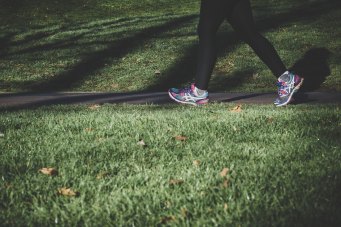
However, the great news is that 15 minutes a day of walking UNIVERSALLY improved health in a study of over 400,000 male and female adults of all ages despite other lifestyle choices. The study demonstrated that a minimum of 15 minutes of walking a day, decreased all cause deaths by 14% and extended lifespan by 3 years compared to people who were sedentary. Every additional 15 minutes daily decreased death from any cause another 4% and from cancer another 1%. In fact, the researchers noted that 1 in 9 cancer deaths may be avoided with that 15 minute walk. Maybe 15 minutes of walking daily is possible for an added 3 years of life or a chance to avoid a death from cancer.

And about that sedentary job, many people would choose to be more active at their otherwise sedentary job if given a choice. Sometimes, we might not recognize some of the options. See if you can get up from your chair at regular intervals or consider moving the printer or trash farther from your desk so you have to get up for access. Take the long way to the restroom or the stairs. Many people appreciate the reminders and step tracking from various fitness trackers.

What helps me? It is the stand up desk that I am a fan of. My stand up desk keeps me moving more throughout the day. Treadmill desks (cons: higher risk of serious injury and difficult to use a keyboard or write due to the movement) and cycling desks (cons: non-weight-bearing) are also available but are more expensive, take up more space and often go unused. It is the stand up desk that I am a fan of. And when colleagues see my at my stand up desk, they often end up getting one and using it too.

Find ways to incorporate that 15 minute walk every day. See if you can set up your sedentary job to be less sedentary. Please share your methods of increasing your physical fitness even when you have a sedentary job.


Photo by Arek Adeoye on Unsplash

Healthier Together Series: Cycle 5A. Nutrition – How To Manage Your Hunger – 10 Things to Know

melissa-walker-horn-lo_udD1o_lk-unsplashHunger can be a natural physiologic signal from the body requesting more fluids or nutrients or it can be cravings (learned habitual behaviors) and pathologic symptoms of a mismanaged metabolism. We sometimes forget to check in and determine why we might be hungry.

NATURAL & HEALTHY HUNGER SIGNS:
1. Dehydration. In most cases, this can be managed by drinking water.

2. Need to replenish nutrient supply.  For most people, eating a variety of colors of vegetables and supplementing with protein, will meet all the body’s nutritional needs. Make a list of easy naturally nutrient rich snacks that you can have readily available – then you can make healthy choices when you are hungry and need to replenish.

HUNGER SIGNS TO BEWARE OF:
3. Insulin resistance. If your waist line has grown since after highschool and you are not pregnant, you are developing or have developed insulin resistance. As we age, we also naturally become more insulin resistant. This means that our body over-reacts to sugars and carbohydrates in the diet which leads to a roller coaster ride of high and low blood sugar levels which lead to fatigue, mental fog & “the munchies.” Solution: Drink water, Eat protein or leafy vegetables when hungry and avoid sweetened or carbohydrate heavy foods.

4. Poor food choices earlier (ie. starting your day with sugar or processed carbs). Eating sugar will cause you to crave more sugar later in the day. Sugar can trigger the same area in the brain as heroin. It IS addictive. Solution: Avoiding it is the best way to manage being losing control. Make smart food choices. Start your day with protein instead of sugars or starchy processed carbohydrates. Choose whole foods.

5. Some medication and illicit substances (ie. marijuana). Some medications and illicit substances make people hungry and eat more, usually poor quality foods like most fast food. Solution: If your meds are making you want more broccoli, that’s great, but if it makes you get “the munchies” or you notice weight gain, have that important discussion with your doctor to see if you can find a way to manage it. Also, when you get “the munchies” or are hungry, drink water, eat veggies, nuts, or a cheese stick or have a light soup.

6. Boredom. Solution: Find something to do that is NOT related to food. Do something physical – take a walk, stretch, dance, move. Connect with family or a friend. Journal, garden, read, play solitaire, play a musical instrument, work on a hobby or create something artistic, etc.

7. Emotional unrest. Solution: If you are an emotional eater, it will be important to find new ways to soothe yourself. Consider finding a counsellor to help you process and learn better ways to cope. Find other healthy outlets – take a walk, spend time in nature, contact a friend or family member who nourishes you, spend time with you pet, listen to soothing music, learn meditation, go to a religious/spiritual place.

8. Habit (ie. before bedtime or while watching TV/movie). If you link certain activities or times of the day with eating/drinking, this is a habit and can be challenging. Solution: The best way to change that habit, it to create a NEW (more desirable) habit to replace the old, undesirable habit. For example, instead of having hot cocoa after being out in the cold or at bedtime, have some hot rooibos tea which is caffeine free and deliciously different. Instead of buttered popcorn with a movie at home, try berries or baby carrots. Keep healthy snack options easily available for “break time” at work- have salty, crunchy and “creamy” options available.

9. Seeing or thinking about food/drink you like. Having a variety of options to eat actually has been shown to increase the amount of food we eat. The larger the plate, the more options of different foods at any time, we eat more and sample more. Solution: Use a smaller plate. If you are sampling, think of the size of your stomach when not-too-full (the size of your fist), and look at the total volume of food you have on your (smaller) plate. STOP adding to your plate when it exceeds the size of your stomach. If you have more foods to sample, take less of each item so that you are not OVER-stuffing your stomach as it would not feel good anyways. Really, if you look at your plate and wonder how that would fit in your body, it’s too much. It’s ok to leave food on your plate. Note: Raw leafy greens shrink dramatically when chewed up, so you can be liberal with raw leafy greens!

10. Worry that later you won’t have time/opportunity to eat (ie. busy schedule). How many of you are “go-go-go” all day long and time for eating is a luxury? As a physician who may be running behind because of an earlier unexpected patient emergency, I hear you. Solution: Keep that stash of quick, healthy food/drink readily available, ALWAYS. Nuts, cheese stick, baby carrots and hummus, celery sticks and almond butter, whatever. Remember, IF you are unable to eat, as long as you are drinking, you are going to be fine for several hours. In fact, if you do not eat, but you maintain proper hydration, worse case, you will have to eat later than desired. However, your body starts to draw energy from your personal fat stores. Unless you are medically underweight, you should be ok to be burning extra fat on your body until you can eat later in the day.

Do you have other times you “hunger” triggers? How do you manage your hunger? What are some of your snacks you keep on hand?

Photo by Tim Mossholder on Unsplash

Healthier Together Series: Cycle 4D. Putting It All Together – Winter Well-Being

aaron-burden-cGW1w-qLix8-unsplashWinter in the Midwest – ice cold this year, but we don’t have the 7+ feet of snow as in Boston. The cold and darkness of winter are often used as excuses as to why someone is not exercising or eating as healthy. It’s used to explain “loss of motivation” to continue to make healthy choices. This “motivation” and “effort” may resume for a short time after the NEW year, but often dwindles away again until the days get much longer and warmer.

Here’s another option. Have “seasonal” wellness plans! Figure out what you need to include to maintain a healthy lifestyle: nutrition, physical activity and relaxation & sleep. There are many ways to incorporate those into each season. They don’t all have to be the same. In fact, the body will be optimized if you change it up periodically, so why not with the seasons? So change up your healthy lifestyle routines for the different seasons.

Here are some suggestions to get your creative juices flowing…Find what works for you.

If you workout in the mornings in the spring and summer, maybe in the winters, you meditate in the morning for a shorter duration than what your workout would have been? Maybe your workout is on the drive home from work or school or running errands- when you already are out of the house. Just DON’T go home first without the workout (as it can be hard to motivate to go out into the cold). Or maybe your workout is at home instead of at the gym. Maybe you use home workout DVD’s or smartphone exercise apps? The workout routine might be different – you may work more on strength or core training or take a different exercise class this season. If you have snow, you may choose to incorporate winter sports into you life – ice skating, skiing, snowboarding, snow shoeing, etc. A good friend introduced me to snow shoe-ing last year, and it’s wonderful! What a treat to be out in nature and having the brightness of the snow recharge me!

You may choose to rely on the crockpot more (especially if you are going to be working out after work and have less time to cook in the evening). You may get more of your veggies in a soup or stew. These also make great lunches the next day! You may cook more winter root vegetables- they last longer after purchase (less frequent grocery shopping trips).

The winter seems to have more quiet times of the day when it might be easy to stop and meditate, even if only for a brief time. There are many smartphone apps that help facilitate and time meditation sessions. You may even find incorporating meditative activities with physical activity is the answer for winter – Tai Chi and Yoga are popular ways to get both the relaxation and physical activity in one.

Sleep changes with the seasons and with stressors. Allow yourself to have a day once a week, when you can sleep in as much as you need. It will help you bring it all together and help keep your mind young and keep you upbeat throughout winter.

Please share what works for you!


Photo by Aaron Burden on Unsplash

Capsule Nutrition = Meal Prep

brooke-lark-jUPOXXRNdcA-unsplashI love the idea of capsule wardrobes. So I thought, why not capsule nutrition? How about the essentials same shopping list (change out seasonal fruit & veggies) & change up the meals? So easy! Also, make recipes/prep short or able to be done ahead of time when you have more time or motivation. Consider once weekly grocery shopping- so foods that don’t last as long, would be used earlier in the week after grocery shopping…AWESOME. That’s the dream. So, I came up with the capsule nutrition plan’s grocery list.

Capsule Nutrition: What you need – Create your own list of the basics to have on hand for healthier nutrition. Here’s my list: 

Produce for the week (Varies with season & preference):

  • Green leaves – 2+ cups per day per person. Eat the flimsier green leaves earlier in the week as the heartier leaves last longer.
    • Lettuces – various kinds, Romaine hearts last longer
    • Kale, Spinach, Swiss chard, Collard, turnip or mustard greens
    • Parsley, cilantro
    • Salad packs – check the expiration date
  • Avocados, lemons
  • Additional veggies that looks good to you – 2 cups per day per person. Consider: cucumber, broccoli, cabbage, cauliflower, brussel sprouts, zucchini, summer squash, eggplant, mushrooms, celery, tomatoes, etc. etc.
  • Fruit – approx. 1 handful per day. Berries are extra nutritious.

Enough for 2 meals daily, some combination of (Varies with availability & mood & season):

  • Fish (Fatty, wild) – 2 days of week
  • Poultry (chicken, turkey, etc.)
  • Meats (beef –grassfed, lamb, pork, bison, etc.)

Dairy for 1+ week (if you are including dairy in your diet):

  • Cheeses – individually wrapped are easy for packing and for quick snack
  • Whipping cream – organic
  • Butter – organic
  • Greek yogurt – plain – enough for 1 week. Individual packed are easy for portion control & for packing
  • Eggs – pasture raised – 2 dozen. Older eggs are easier to peel (remember to boil with 1tsp baking soda or if steamed in an egg steamer!).

Keep stocked:

  • Salad dressing (No sugars or high fructose syrup. Avoid diet dressings)
  • Olive oil, coconut oil
  • Mustards, vinegars, capers
  • Seasonings: pick your favorites. Some of mine: Greek seasoning, garlic salt with parsley flakes, Malden sea salt, black pepper, red pepper flakes, dried parsley flakes, soy sauce, thyme, ground ginger, cinnamon.
  • Nut butters – like almond butter, peanut butter, cashew butter. Make sure they are without additional ingredients other than salt. This usually means the oil separates and you will have to stir it when you first open the bottle.
  • Various nuts (almonds, walnuts, cashews, pecans, hazelnuts, peanuts, etc.)
  • Old fashioned rolled oats
  • Unsweetened coconut flakes
  • Bittersweet chocolate chips
  • Flaxseed
  • Chia seeds
  • Almond flour
  • Coffee
  • Tea – various

Frozen- keep stocked:

  • Veggies (chopped onions, peppers,  & greens such as spinach, green beans, peas, edamame, etc.)
  • 1 bag Berries
  • Ezekiel bread (if bread is part of diet)
  • Low carb tortilla

Photo by Brooke Lark on Unsplash

Healthier Together Series: Cycle 4C. Relaxation & Sleep — Meditation

filip-mroz-zK049OFP4uI-unsplashThe act of quieting the mind…Meditation.

Meditation comes in various forms and is easily misunderstood. It does not require one to empty the mind. How many times have I heard, “I can’t think of nothing!”?  In fact, you can let the thoughts pass by in your mind and observe them.

There are many ways to meditate, but the focus is on practicing to quiet your mind. You might learn to quiet your reactions to thoughts and events in the past and future. You may work on focusing on the present and practice bringing your mind to the present and experiencing the present (Mindfulness Meditation). You may train your mind to be quiet by distracting it, such as with a mantra (Transcendental Meditation) or deep breathing exercises or by incorporating specific physical activity (Tai Chi or Yoga).

It does not require too much time. In fact, you can choose and you can meditate for various amounts of time based on time you have available or stress level in your life. Also, as you practice, like any sport or activity, it gets easier and you are more effective and efficient with the time. There has been evidence that as little as 12 minutes a day can make so much of a difference that it structurally changes your brain (for the better) and improves your overall function. It reduces stress, improves depression, anxiety, reduces pain, improves chronic disease management, improves quality of life, trains our minds to be more adaptable and flexible and it works for children too!

Meditation can be done anywhere, but it is easiest in a quiet place. There are apps on the phone/computer/tablet and there are books, classes, meetings and audio files. It can be learned on your own or with a guide or teacher. It’s pretty cool because it’s about you and it’s good for you and you can notice positive changes in other areas of your life pretty quickly. Your neurons in your brain start to work together and coordinate. Your body has a chance to check in with itself and reconnect.

Find a way to incorporate some practice of meditation on most days of the week. Work to find a time when you can disconnect from the electronics and focus on you, in the present moment. Give yourself a time out and allow yourself to be You. Just right. Right now. Exactly as you are.

Photo by Filip Mroz on Unsplash

The 5 Keys to Incorporating Morning Exercise & Healthy Nutrition – How To Guide

stil-N9uOrBICcjY-unsplashPrioritize your health. Learn to plan and to follow a plan successfully. Make “Success” your habit.

1. Develop a PLAN. Every 2 weeks: Plan exercise in 2 week chunks. Make your exercise plan every 2 weeks.

  • Sit down with notebook and calendar.
  • Write how many continuous weeks you have been exercising as planned.
  • Review how the last 2 weeks went & determine how you change your workout or advance it for the next 2 weeks.
  • Write down what you learn from your review.
    • I total the calories I burned in the last 2 weeks and the total minutes exercising.
    • I make notes of what I want to do differently or if I will try a different exercise or weight.
    • I note if certain music correlated with more enthusiasm or a better workout.
  • Then write what you will change for the next 2 weeks, such as increasing the weights you were benching or the incline on the treadmill or the lower body exercises you are going to do in the upcoming 2 weeks.
    • I write my plans for improvement
  • Look on the calendar and note any significant scheduling challenges in the next 2 weeks (such as travel).
    • I might move a harder workout to a better day fo th
  • Look at the next 2 weeks and pick 5 days each week that you CAN workout in the morning. PUT IT ON THE CALENDAR exactly when you will work out. Include time for your shower, blow dry, etc. and your commute if applicable.
    • For example, I am least motivated to workout on Monday mornings and Friday mornings- so those are my “flex” days when I don’t plan to work out. The rest of the days of the week, I will plan a workout. I figure out when I have to be on the road to work & I schedule my workout 2 hours before I go off to work. 2 hours gives me time for my planned workout & shower & getting ready for work & eating breakfast. If I will be travelling or have a particularly EARLY morning, I may move one of my workout days to Monday and/or Friday– my “flex” days.
  • Make sure there is NEVER 2 days in a row without a work out.
    • For example, I have been following my plan and working out Sat, Sun, (Mondays are off),Tues, Wed, & due to a family emergency, I miss Thursday (which is my usual workout day), I will make it up on Friday (instead of taking that off as would have been my usual). So, Mondays & Fridays act as my make up days, my “flex” days.

2. TRACK it. Every Workout Day: Log every workout in the notebook on the day you work out.

  • Log at a minimum: date, time, what you did.
    • I log my weight & my heart rate (HR) monitor data: average HR, maximum HR, calories burned. I also take a minute to rate how motivated I was prior to my workout (scale 1-3) and how much effort I put in (scale of 1-3).
  • Jot down any notes on the past 24 hours including today’s workout .
    • I might reflect on how much I was yawning during my workout & recognize that it is because I ate so many starchy carbohydrates yesterday. Basically, by reflecting, I am learning to read my body and understand how I am feeling and how to optimize my daily function and happiness. It is kind of like mindfulness meditation.
  • Review what you will do tomorrow & make adjustments as necessary based on your reflection of the past 24 hours and how you are doing today.

Again, prioritize your health. Learn to plan and to follow a plan successfully. Make “Success” your habit.

  • KEY POINT: Once it is planned, you do not deviate from the plan unless you “plan” to deviate from it at least 1 day prior to the event. Here is an example using your workout plan: you planned to work out Upper Body on Tuesday, Lower Body on Wednesday, Upper Body on Thursday. Tuesday goes great. On Wednesday, after your Lower Body workout, you realize your Upper Body is not going to be ready to do the workout that was planned on Thursday. On WEDNESDAY, you can ADJUST your original Thursday workout plan, while you are reviewing the next day’s workout. You should change the workout plan for Thursday on that Wednesday- maybe you decide you will just walk on the treadmill. Now, when you wake up on Thursday and get ready to workout, your notebook tells you the plan is to walk for 20 minutes at a brisk pace. Fine. You are still ON PLAN and being SUCCESSFUL. You know the adjustment was thoughtful and deliberate instead of because of your “mood.” You are training yourself to be healthy and successful and feel good about what you are doing.

3. Have a BACK UP Plan. ALWAYS makeup any missed workout with SOME movement.

  • If possible, even if the workout will be missed, consider doing at least 5 minutes of some physical activity that will boost your heart rate.
  • 8Fit is an app with quick body weight exercises that can be done without any equipment in a small space- even a dorm or hotel room.
  • From the example above, that upper body workout that I planned not to do on Thursday, I will plan to make it up on the Friday morning. I put it on the calendar. I will also note that when planning my next 2 week workout schedule, I will need to reconsider if I need to change my workout pattern, the weights or the exercise(s) I am doing.

4. Keep meal planning simple. Have a plan for your basics (as back up in case you don’t have more exciting meal plan available) & modify as necessary. Here is an example of mine using drive thru which is on way to work :

  • 4 Breakfast options – availability and convenience are key, I don’t have to think about it.
    1. At home: Eggs with baby spinach, mushrooms, feta cheese with avocado &/or tomato slices or other veggies. Tip: Make Omelette Muffins. Mix up a large bowl of 12 eggs with a handful each of: chopped vegetables (left overs from dinner the night before are fine), chopped ham/bacon/sausage/lox (optional), and grated/crumbled cheese (cheddar, swiss, goat, or feta cheeses work great) and pour into greased muffin tins. Bake at 350 degrees for 20 minutes into omelette muffins. Store in the fridge or freezer for quick grab and go breakfast options that can be eaten cold or heated up.
    2. Home or easily transportable: Omelette muffin (above), Chia seed pudding or Plain Greek yogurt with 1 Tbsp unsweetened coconut flakes, dash of cinnamon and 2 Tbsp almond butter. Bonus additions: chopped pecans or ground flax seeds or Chia seeds too. Occasionally, I add 1/4 c. fresh berries. If weight or carbs is not an issue for you, you can add 2 Tbsp Old Fashioned Oats and/or 6 bittersweet chocolate chips.
    3. Traveling/On Road/No Kitchen/No Time: Drive thru breakfast sandwich or wrap with at 2 eggs (ask for the extra egg if it only comes with 1)- key when I am not able to eat breakfast before leaving the house and the boys ate the last of my prepared breakfast options.
    4. Anywhere: Large iced or hot coffee with cream with plan for midmorning “snack” or  late brunch out or just plan “not hungry.” Tip: If you make your own coffee at home, add cinnamon to the coffee grounds to jazz it up.
  • 3 At-Work QUICK Lunch Options:
    1. Time crunch day- no time to prepare or plan or grab a salad: In my work refrigerator: plain Greek yogurt, almond butter, cheese, boiled eggs. Will mix up yogurt, nut butter and nuts (always in my bag) for protein power lunch.
    2. Bring from home: salad or prepared salad pack & leftover protein from dinner night before or salmon or tuna pack. Often, I add cheese crumbles and/or avocado to the salad. Salad dressing at work.
    3. In a Rush/Out of Groceries at home: Drive thru Cobb or other salad with chicken, egg or other protein on top with unsweetened iced tea.
  • Dinners Vary. Make extra for lunch the next day. Always have protein & non-starchy vegetables. If no salad earlier in the day, I will have one with dinner on most days.
  • Drinks: Drinks are water, black coffee & unsweetened teas.
  • Desserts: Dark chocolate and berries and unsweetened fresh whipped cream,  individually or in various combinations, are favorite desserts. Nuts and cheese make a nice crunchy/savory option too.
  • The Day OF my plans to go out for dinner: If I am going out for dinner, ie. on Friday, I eat breakfast later and then nibble some cheese, handful of nuts or celery with peanut butter in the afternoon if I get hungry before dinner.
  • Eating out: Majority of the time– keep it simple with protein & veggies. Replace the bread/fries/potato with side of veggies or salad. If I had a great workout and did not eat any sweets or starchy carbs earlier in the day, I may share a dessert.

Keep your nutrition plan simple and easy to keep track of. Eat lots of veggies and eat your protein and stay hydrated. You don’t need to spend energy thinking up new ideas or figuring out what you need to eat when you are in a panic or have limited choices. Plan ahead and be prepared. Follow your plan.

5. Develop Self Compassion. Perfection is not the goal. You are human. Striving towards excellence as a human, as the most perfect version of you, means that sometimes, there are deviations. In those moments, practice saying to yourself: “I am doing the best that I can, right now.” Then, let it go.

Tomorrow, you can choose to reflect and learn from it. Ask yourself if there was something you could learn from that experience. For example:

  • Reflect: Was there something, a person, an event, a place, that triggered the deviation or altered your plans?
  • Learn: Is there anything you can do differently in the future under similar circumstances?
  • Reaffirm: Repeat to yourself, “I am doing the best that I can, right now.” Then, move forward as a wiser and more prepared You.

Summary: Prioritize your health. Learn to plan and to follow a plan successfully. Make “Success” your habit.

This post is in honor of my mom.

Photo by STIL on Unsplash

Healthier Together Series: 4B. Physical Activity – Crisp Weather

dan-freeman-VAWqURK_Th0-unsplashToday’s physical activity note:
Master the Common Fall Excuses

Enjoy now and prepare for what’s to come. In the Midwest, fall marks the changing weather and beautiful sounds and colors around us. Leaves are changing colors, sunsets and sunrises are beautiful, the crinkly leaves on the ground and rattling in the trees are lovely. Kids are in school so there are quieter times of the day in the neighborhood…depending on where you live.

However, with these changes, comes some more frantic moments – before and after school- coordinating with others regarding schedules, homework, work, feeding the family, extracurricular activities, social activities, etc. running the household- whether you are alone or with others, is busy. And when the days get shorter and it gets cooler out, our body’s natural responses may mean we start to decrease our vigilance and focus in taking care of ourselves. Waking up gets harder, getting out of the warm bed and into the cold air is a challenge, the weather outside starts to seem too uncomfortable to go out there. On top of it, if you are also needing to worry about getting the kids up and ready for school, that takes up precious time so it’s easy to run out of time in the morning to squeeze in some physical activity. By evening, you are tired and hungry, have to drive everyone to their activities, cook, run errands, go through the mail, help with homework and “projects,” maybe even do some of your own work, etc. etc.

This “Fall transition” often manifests first, in skipping workouts or cutting out or cutting down on our physical activity. Where to squeeze it in?!

First: Plan ahead and be prepared. You know what interfered with your health plans in the past. “I am tired and have so much going on, there isn’t enough time” and “I need more sleep” and “it’s too cold” are common excuses of why those workouts fizzled out.

Master Fatigue
If you keep active through the changes of seasons and cold weather, your metabolism will continue to rev at a higher burn rate through winter (instead of the usual “metabolic slow down”) and especially during those times you may eat foods you wouldn’t normally eat (hello holidays). Also, if you remain active, you will feel less fatigued in general.

Remember, you need less time in bed and you get better sleep the more fit you are. In other words, you add time to your day when you are fit! So if you are tired of being tired, getting fit and staying fit, will help with that! Organize your sleep around your workouts! If you wake up early and are still sleepy, nap later, go to sleep earlier, deal with any sleep debts at times other than your physical activity time. Keep your physical activity a top priority.

If you are tired at the end of the day or after work when you normally workout, do your physical activity and THEN rest. The physical activity can be abbreviated or an alternative less intense activity- it still counts! You may find that once you start exercising and get in the habit of exercising, you develop MORE energy and are no longer too tired to do other things! Again, regular physical activity gives you MORE effective awake time in your day!

Master the Cold
About the cold, if you workout outside and you live in a climate with brutal winters, have alternative workouts for those days you can’t workout per your planned routine. Of course, if you are able and want to keep working out outside, you can find appropriate winter sports or go to an outdoor recreation store and get the appropriate cold weather gear so you can continue to be physically active outside.

When you have the right gear, it’s so much more fun and motivating! My personal cold weather outerwear is from the NorthFace. Initially, the cost prohibited me from trying it but after spending way more in multiple different jackets that each had limitations, and therefore limited
my options, I invested in a NorthFace jacket. I can wear my jacket indoors or outdoors and my body temp feels the same and unaffected by the temperature. No overheating or freezing and it is lightweight and easy to move in. Some days, I wear it all day long- inside and out. It has revolutionized my options for winter activities.

Here are some additional thoughts and tips. See also the earlier blog about how to manage excuses.

1. Pick a shorter workout to do in the morning, that you will do. Maybe you will workout at home and do a DVD workout program or use one from YouTube which is only 15 minutes? Or try high intensity interval training so that you get more out of your workout in less time?

2. Remember it is cold when you get out of bed whether it is to get ready for work or the kids or if you are going to treat yourself to some personal time to move and enjoy the quiet of the morning before others wake up. Use this early morning time for yourself first. Keep your workout gear, clothes nearby so you just start before you are fully awake. Have some warm cushy outer covering to put on over your usual workout clothes (or PJ’s) so you are warm as you get up to start moving. Get into those workout clothes, ie. sports bra. Just getting into my workout clothes – mainly my sports bra, makes it 99% more likely I will exercise.

If you can set your thermostat on a cycle to warm up 30 minutes before waking up, that will help too.

Then, see #1 above – move your body- Tai Chi is great or take a brisk walk outside. Do some stretches. Whatever will get your blood and fluids circulating…it is such a great way to start the day.

3. Plan to do some movement in those brief moments throughout your day when it’s not enough time to do something else, it may be the times you might check email or social media. Find some physical activities you can do at those times. At least standings is better than sitting. Walking is even better. Plank pose is good. Push-ups- even modified push-ups against a wall. Some crunches. How about some lunges or squats or plies? High knees? What about calf raises where you go up and down onto your tip toes? Do you like jumping jacks or jumping rope? Swing your hips while you are standing. Overhead reaches to stretch out. Gently roll your neck and shoulders. How about some arm circles?

Please share your tricks to maintaining or incorporating physical activity into your day as you master the excuses.


Photo by Dan Freeman on Unsplash

Healthier Together Series: Cycle 4A. Nutrition – Go To List

dan-gold-4_jhDO54BYg-unsplashREAL food. Here are some of my go-to REAL food ideas. A little planning & prep can go a long way.

Remember: Avoid foods and drinks that are artificially made “low fat” or “no fat.” If nature made it with fat, that’s how it’s best managed by your body. Avoid artificial sweeteners. Monk fruit may be ok. If you are having something sweet, own up to it and only have a little. You can modify the list below to remove grains or dairy. 

Snacks to have on hand (**Always available, keeps longer):

In the Fridge:

  • Raw veggies – usually have 2-4 varieties in fridge for week:
    • carrot sticks
    • sugar snap peas
    • celery sticks
    • radishes (eat salted- yum)
    • cucumbers
    • peppers
    • romaine hearts
    • grape tomatoes
  • salad/baby spinach packs
  • hummus
  • Greek plain yogurt
  • Baby bell (or other individually wrapped) cheeses**
  • crumbled smoked blue cheese or feta cheese
  • blue cheese or other salad dressing**
  • boiled eggs (boil a dozen at beginning of week- remember boil older eggs & add 1 tsp baking soda to water helps make them easy-peel)
  • crispy oven baked nitrite/nitrate free bacon (line on cookie sheet & bake)
  • deli meats, (pasture raised IS better)
  • leftovers: roasted veggies or meats
  • Berries occasionally
  • dark chocolate covered cocoa dusted almonds** (Buy in bulk & stored in freezer)

NOT in the fridge (often in my desk drawers in office or pantry at home)

  • nuts** (various flavors ie. wasabi soy sauce almonds, smoked almonds, salted peanuts, macadamia nuts, pecans, etc.)
  • nut butters** (peanut, almond, cashew, etc.) – great to add to other foods or when in a pinch, just scoop it out in a spoon and eat 1 spoonful- surprisingly satisfying.
  • beef jerky** (pasture raised is best)
  • tuna packs**
  • salmon packs** (great way to get wild salmon, instead of farm raised “Atlantic” salmon – which doesn’t have the higher omega 3’s of wild salmon)
  • olives**
  • pickles**
  • Kind bars** – there are many varieties…these are when I want something sweet

Rotating foods:

  1. Kale Salad: kale- 1 bunch (julienne or chopped fine, massage leaves with drizzled olive oil), juice of 1 lemon juice, sprinkling of pine nuts, grated Parmesan to taste
  2. “Everything” Mix: nut butter + flax seed + chia seeds + coconut flakes (unsweetened)+/- hemp hearts +/- few choc chips +/- other nuts/seeds (optional) (which is combined & put together with some maple syrup (optional) & stored in fridge in balls or crumbled…then when desired, mix it into plain Greek yogurt +/- berries). Recipe for a no-bake snack.
  3. Chopped Colorful Salad or Wedge salad – nitrite/nitrate free bacon, boiled eggs (as above) +/- avocado/blue cheese +/- grape tomatoes on salad pack (or quarter of iceberg lettuce or cut up hearts of romaine lettuce) with leftovers from dinner
  4. Tuna/egg/salmon salad on romaine lettuce leaf (use like taco shell) or on cucumber slices/boat (scoop out the seeds) or on salad pack. (If you like capers, add some to your egg salad – it is divine!)
  5. Nut butter on celery or apple slices or stirred into Greek yogurt
  6. Deli meat (as above) or tuna/egg/salmon/chicken salad wrapped in romaine with hummus or cheese +/- additional veggies like peppers slices or tomato or avocado (wrap in saran wrap like nori-maki to store in fridge if making ahead)
  7. Spinach with almost anything (can saute or eat fresh or put in microwave. Then, put dressing or soy sauce or vinegar w/olive oil or sprinkle with cheese & bacon or toss berries in it)
  8. Broccoli slaw – saute or add to almost any dish. It’s easy and an excellent source of vitamins and delicious.
  9. Eggs: fried/scrambled/boiled with tomato slices & avocado (+/- sprouted ezekiel bread-if occasionally eating whole grains, found in freezer section only) +/- salsa
  10. Homemade Trail Mix: mixed nuts with some dark chocolate chips/carob chips +/- unsweetened coconut flakes
  11. Cabbage – sauteed as “base” for other foods in place of pasta or rice
  12. Spaghetti squash -baked – to eat with spaghetti with meat sauce
  13. Cauliflower – as “mashed potatoes” or “rice” or baked with parmesan or roasted or raw, etc. etc.
  14. Meatloaf, prefer grass-fed ground beef or ground lamb – great as leftovers & easy to add to almost any other meals (if have extra time, would make it into meatballs)
  15. Green beans (blanched) & grape tomatoes halved (soy sauce, chopped garlic & sesame oil)
  16. Edamame – boil x 5 minutes & sprinkle with salt over pods. Good hot or cold.
  17. Eggplant slices – baked or fried with some olive oil & salt or grated Parmesan or other seasonings. Add some tomato or marinara sauce on it with a sprinkling of Parmesan or Asiago & baked- it is AMAZING.
  18. Mushrooms – stuffed. Or baked with soy sauce or cheese
  19. Cheese crisps (sliced or shredded cheese placed on parchment & baked or microwaved until melted & flattened out, then browned just a bit to make them crispy when cooled down)
  20. Stir fry veggies +/- protein
  21. Hummus with veggies
  22. Peppers stuffed with deli meats (see above), tuna salad or sliced with hummus or in stir fry or salads
  23. Leftover meats cut into strips (Always cook extra protein for dinner & cut up the leftovers. Strips are easy to grab as snack or put in romaine boat or toss in salad or stir fry or with cabbage stir fry)
  24. Coconut granola (I did not use both honey AND maple syrup, so it wasn’t too sweet)
  25. Golden Low Carb granola from the Low Carb Diet Doctor

Keep healthy food options easy and readily available and you will improve your nutrition and your health from inside…out. Please share some of your suggestions for easy healthy real food ideas.

Photo by Dan Gold on Unsplash