Category Archives: Healthier Together

Healthier Together Series: Cycle 2B. Physical Activity — Look at the numbers…

andres-urena-qSw5XKtUyus-unsplashToday’s Physical Activity notes:

Numbers are real and give us a way to compare and evaluate things. They can help us keep track and improve our behaviors and processes in business and manufacturing and industry and science. Numbers are also helpful in our health. We look at heart rate, blood pressure, temperature, respiratory rate. We have people rate their pain level. We use numbers in assessing our risks for various diseases – ie. cholesterol, fasting insulin, blood sugar, hemoglobin A1c (representing an average of our blood sugars over 3 months), etc.

One way to assess your physical activity level and your fitness is to look at numbers also. In an earlier post, I discussed perceived exertion and monitoring heart rate. I recommend using numbers to keep track of what you are doing and where you want to go. Numbers are easy to monitor and helpful in setting goals and assessing your progress. Today, I recommend getting an idea of your general daily activity level & assessing your current fitness level.

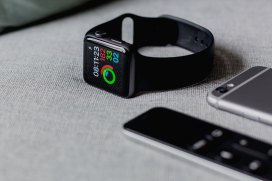
1. General daily activity level. Wear a pedometer or accelerometer or use an equivalent app on your smartphone or get the popular FitBit or Apple watch to get 5-7 days of numbers. Find out how active you are at baseline. If you workout regularly, wear it also when you are working out. If you do not workout regularly, then you will see how active you are at this time when you are not regularly working out.

It helps to get many days of numbers and average them out. (You can get the average steps in a day by adding up all the numbers and dividing that big number by the number of days you collected numbers.) If you are walking on average closer to 3,000 steps total in a day, that’s more like a couch potato. If you are walking 10,000 or more steps a day, you can say you are active and your body will have the healthy benefits of increased circulation.

The goal is to figure out where you are starting & see if you can increase that number by 10% every 2 weeks. (10% would be taking off the last number in your daily average. For example: If you walk 3,000 steps, you would need to increase it by 300 steps in a day at 2 weeks, so that you are walking 3,300 steps total in a day).

2. Assess your fitness. First, figure out your baseline heart rate. Ideally, you will check this when you have been sitting or even better, first thing on waking up. Use a heart rate monitor if you have one. OR You can figure it out on your own by doing this: Find a clock that shows seconds. Find your pulse on your wrist: palm up, on the thumb side, under your wrist crease and to the outside of that middle tendons on the wrist, you can feel your pulse. Some people gently feel their pulse in their neck. Count the number of beats in 15 seconds and multiply by 4. If you check it every day for a week, you will have a good idea of your baseline heart rate range.

As your fitness improves, this baseline heart rate actually will get lower. This is because regular movement & activity (often called exercise), strengthens your muscles including your heart, so it can pump more with fewer beats. It becomes very efficient with each pump. That’s why highly trained athletes often have VERY low heart rates.

Now that you know your baseline heart rate, you will find out how much time it takes for your heart rate to return to the baseline range after exercise or strenuous physical activity (when your heart rate was higher than your baseline). From the time you have finished your activity or exercise, time how long it takes your heart rate to return to your baseline. As your fitness improves, the time for your heart rate to return to baseline will become shorter. In other words, your heart can adjust that much faster and more efficiently to the demands of your body. This is fitness.

It is nice to assess these numbers every 4-6 weeks & write it down! It is SO motivating!


Photo by Andres Urena on Unsplash

Healthier Together Series: Cycle 2A. Nutrition – Hydrate

marek-levak-NEWFRkV4F3s-unsplashToday’s nutrition notes:

At this point, learn how to stay hydrated. Unless you have heart failure, chronic kidney disease or liver failure, or your doctor tells you to restrict your fluid intake, you will benefit from hydration.

Water is necessary for survival and optimum functioning of all of your body and cells. Many if us are in a chronic mild dehydration state. It’s hard to remember to drink water if you are running around and busy. Your body can function better if you rehydrate yourself.

You will know you have enough water if your urine is clearer and less yellow and you are going to the bathroom at least once every 3-4 hours while you are awake. The amount of water you need will vary, but you can know you need more water if your urine is getting darker or more concentrated in color.

When you first increase your water intake, you may have to go to the bathroom more often but your body (kidneys) will adjust. It may take a few days to adjust.

How can you increase your water intake?

1. Get a water bottle or other beverage container/glass you like. It may be colorful or steel or a certain shape. You may like straws if you wear lipstick and don’t want the lipstick mark on your cup/bottle.

2. Put your water in a visible location, easy to reach. You can take sips all day.

3. Make your water interesting. Try sliced lemon, lime, cucumbers, &/or sprigs of mint leaves. Try dropping some berries in your water. Make an UNSWEETENED herbal or green tea & have it hot or iced. You can try all sorts of teas and combos of fruit and herbs steeping in your water for infinite flavors. Some people have it chilling overnight in a large jug for the next day. In the morning, they take out the berries, cucumber, etc. before drinking the flavored water or pouring it into their water bottle to take to work, school or the gym.

4. Link a drink of water with a routine activity. For example, every time before you stand up from your desk, you might take a swig of your water. Or every time you check email, you will drink some water.

5. Log your water intake on an app on your phone or in a notebook and mark each time you have a drink and aim for a certain amount you know is right for you. This works well for people who like records of what they are doing, their progress.

Bottom line: find what works for you and stay hydrated! Your body will be able to better take care of you if you give it what it needs. Have fun with it!

Photo by Marek Levák on Unsplash

Healthier Together Series: Cycle 1 D. Putting It All Together — Midwest Winter

In this section, I am hoping to integrate people’s experiences and wisdom and/or offer examples of how we apply what we have learned. Please be sure to share your experiences and wisdom. This is how we can help each other and become healthier together.
*Disclaimer: Apps or links are listed as examples & do not necessarily represent the BEST ones or the only options. They are included to help you get started on your search for the right resources for you. So please share what you are using too.

Here is an example of putting it all together:

Scenario: Midwest. Winter. Cold. Darker earlier, longer. Work is busy. Traffic is terrible in bad weather- longer and more frustrating commutes. Not going outside much. Limited exposure to nature. See fewer people socially. Sleep is messed up. Craving and eating comfort foods that increase blood sugar and therefore insulin. Gaining weight. Getting more tired. Being less active. Feeling bad about not exercising, eating poorly and weight gain. Feeling progressively more down…sound familiar?

Thank goodness for Spring! However, what about all those months before Spring arrives?

Winter happens EVERY year. Plan for it. Let your healthy habits continue to help you. Many people schedule a break to warmer climates during winter or early spring (maybe too expensive for some of us), or they embrace it and find a physical activity that they can do in the midst of nature’s healing effects. Mental planning helps. Journal or keep a log of your observations. Here’s a plan:

1. Limit your new transitions that use up your activation energy and brain energy. You have lower reserves in the winter. Keep the things, people, activities that rejuvenate you and give you energy, maybe even increase the duration of exposure to them. Note: not adding more, just make it longer. It might mean eliminating some of the energy drains.

2. Maintain your healthy eating habits. In particular, keep the amount of white starchy carbs and sugars lower. This will keep your energy and mood up and also your weight stable! Stay hydrated- UNSWEETENED clear nonalcoholic beverages are best, like water or unsweetened tea.

3. Always continue your regular daily physical activity, especially in the winter. This is not the time to change it up or take a break. Start your day with a boost of activity- as little as 7 minutes will help you! It will save you from the winter blues and regulate your sleep and eating and your weight. When you are away from home or when there is a time crunch, try the 7 minute workout which you can find online. A sample iphone app: The 7 Minute Workout “Seven” with High Intensity Interval Training. There are MANY online videos that also show how to do the complete body workout.

4. Practice your self hypnosis to allow you to develop control of your mind so you can relax or sleep when you need to. When you are particularly stressed or if you have insomnia, it is nice to have your brain help you. Given the nights are longer, maybe you can use some of the extra darkness to practice relaxing the mind. 2 sample apps on the iphone: *Hypnopack. Has 5, 15, 20 & 27 minute programs and also can be used for other behavior change helpful for public speaking, anxiety release, studying & memory, etc. *Create Inner Peace & Calm with Glenn Harrold is another iphone app that many find helpful, has some free & some components you can choose but have to pay for.

5. Reach out and connect with nature and the people who energize you. This might mean taking a walk or snowshoeing in nature on a winter morning with a friend.

Bottom line: you can learn from previous experiences, what your patterns are and maximize the joy you get out of your life with a little planning. Taking care of yourself is a choice and it helps make the world a better place. And you deserve it!

Healthier Together Series: Cycle 1 C. Relaxation & Sleep — There’s an app for that…

Today’s Relaxation & Sleep Notes:

This group of notes will be geared towards how to relax, decompress, reduce stress and/or have more satisfying sleep. As a physician, I often have people come to me looking for a pill to help them relax or sleep or otherwise decrease their mental activity, quiet the mind. They are basically asking me for something to turn the brain’s conscious mind “off” or at least turn it down. Unfortunately, many of these pills are addictive or at least can cause a physical dependence. The media seems to promote these drugs as if everyone is taking it and it is “normal” almost to the point of making these pills trendy.

I am not a fan of pills if they are not necessary. And I am DEFINITELY not a fan of causing someone to become dependent on pills unnecessarily, and especially if there might be an alternative way to take care of them. Many of these pills, other than having dependence and addictive potential, can cause motor vehicle accidents, injuries at the workplace, allow misuse by “sharing or selling” it to others, and they take away your control of your own mind’s abilities to self regulate and calm itself. Also, over time, some of these meds require increasing doses as the body adjusts and needs more. They can have terrible withdrawal. In the worst cases, they can kill.

You can imagine, I wanted to learn other options for my patients–and initially, this search was prompted when I first started interacting with pediatric cancer patients and their family members. The children were scared, anxious or in pain or uncomfortable or dreading treatments. Also, their parents, siblings and close friends were having difficulties watching a loved one go through pain, procedures and fearing suffering and death. I wanted to be helpful.

I looked for options that would actually empower my patients and their families, improve their well-being, allow them to sleep, decrease their anxiety. I searched for options that would be able to be used on the road, at work, in the hospital, anywhere & whenever they needed it. I wanted tools that could be flexible – used for relaxation or for sleep, and that got more effective with time.

Fortunately, I went to a medical school that is progressive and understands the complexity of the human experience and appreciates an integrated model of providing health care. I had the opportunity over 3 years, to get advanced training in Medical Hypnosis. And guess what I found out? Using what I learned in my Medical Hypnosis training, I learned to teach my patients how to quiet their own minds. They learn how to train their own minds to relax, and if they want, to sleep!

Interestingly, there are apps for this also. The key is practice. How do you practice? Repetition.

I recommend finding a self hypnosis app or use Bud Winter’s sleep training or find a trained specialist who does medical hypnosis and chose a single method you like and use it regularly for a period of time. It will become more effective, and work faster, with practice. It’s a way of learning how to allow your conscious mind to talk to your subconscious mind. Once you learn the power of self hypnosis and develop the ability to control your own mind, you can accomplish anything. Relaxation and sleep will be within your mind’s control because you will have learned a way to quiet the mind.

Healthier Together Series: Cycle 1 B. Physical Activity — Workout bonus

lindsay-henwood-7_kRuX1hSXM-unsplashToday’s Physical Activity Notes:

First: I will often use the terms physical activity and workout interchangeably. When I use the terms “working out” & “workout,” I specifically refer to intentional physical activity that is planned for the purpose of being exercise. Working out is deliberately moving for health, fitness –> exercising. Physical activity is anything we do that moves our body and includes working out, exercising as well as other activities we do daily.

Good news: since we wake up in a mode burning our body’s stored fuels, whatever physical activity we do in the morning prior to eating or drinking calories, accelerates our fat burning by using up our muscles’ stores of glycogen (energy stored in muscles). This means that you get to drink or eat a bit more freely after being physically active in the morning. In fact, if you workout vigorously in the morning (if you used up all the glycogen in your muscles), you can add some unprocessed carbs to your meal within approximately 30-60 minutes & your body will put the extra blood sugar (the glucose from digesting the carbs) into your muscles and NOT into fat cells. HOW COOL IS THAT?

Remember, if you eat foods that spike your blood sugar (especially foods like processed carbohydrates including sugars), your insulin will spike and your body will store most of that extra blood sugar in your fat cells! So, your FAT stores will GROW BIGGER…and mostly around your middle. NOT your goal. So, that means if you want to eat/drink that higher carbohydrate food or drink & you don’t want to grow your fat, WORK OUT first! You get the biggest bang for your buck if you are physically active first thing in the morning before you eat or drink any calories (drinking water is better).

Remember, the “physical activity” can be:

1. Low intensity movement for a longer duration – like walking for 30-40+ minutes or an activity that is at a perceived exertion level of 5-7 or heart rate approximately 60% (+/-10%) of your personal maximum heart rate. *see previous blog about perceived exertion and heart rates for more info.

2. Spurts of higher intensity activity for a shorter duration (even 4 minutes counts!). This might mean boosting your perceived exertion closer to 8-10 or 80-90% of your maximum heart rate for very short spurts, no longer than 30-60 seconds, interspersed with 2-5 minutes of lower intensity such as level 5-6. Basically, you go hard for 30 seconds then easy for 2 minutes, & repeat a few times. I like 4 cycles. — Another option, look up the 7 minute workout online.

The key is to deplete or significantly lower your body’s storage of glycogen with exercise and voila! You now have created an empty space (your muscles and liver) where your body will put the extra sugars in your blood (from the carbs &/or sugars you have consumed) & it is NOT going into your fat cells for storage. It is getting burned up in your muscles immediately. If you have eaten protein & fat within a low carb “break-fast,” you will just continue to be burning fat.

Bottom line: If occasionally, you are craving extra berries or a sweetened cup of coffee or tea or other starchy carbohydrate with your breakfast, & you don’t want to worry about it increasing your weight, work out first thing in the morning! It’s a workout bonus!

Photo by Lindsay Henwood on Unsplash

Healthier Together Series: Cycle 1 A. Nutrition — Make one change…

hisu-lee-bQLCyj-9-tk-unsplashThis week’s nutrition notes:

In an earlier a post, I mentioned how our body starts out in our personal best metabolic state…basically after >6 hours of sleep, not eating or drinking anything, our body is burning stored fuel (glycogen and/or fat) for energy (which is possible because our insulin levels are lower). We like that. Most of us have enough fat on our body that we can spare to burn some for fuel. Our body’s insulin levels are meant to drop down while we are sleeping (A.K.A. fasting) & therefore, we are more likely to wake up in a fat burning mode. Use this to your advantage.

This week, make sure your first meal of the day, “break-fast,” has protein. You can add leafy veggies too. You can add fat too. So that first meal, whenever it is, might include organic free range eggs, nitrite free bacon, left over meats/chicken/fish from night before, avocado, butter, spinach, mushrooms, hard cheese, etc. ***The key is to avoid the starchy carbohydrates (potatoes, bread, pancakes, waffles, crepes, anything made with wheat flour, etc.) and sugars.

If you eat protein & fat for that first meal, your blood sugars remain stable, you DON’T have an insulin surge, so your body can continue in a fat burning mode from overnight & you continue to nourish your body with nutrients. Also, you may notice that your hunger levels are better later in the day and you have more energy the rest of the day.

So, look for low carbohydrate “breakfasts” with natural proteins, fat with or without leafy veggies and water, tea, or coffee (with cream if you like, but hold the sweetener). Make your breakfast work for you.

Photo by Hisu lee on Unsplash